


 Maya Collins · Gardenizi
Propagation, beyond the first root
Roots are a beginning.
Not a finish line.
A cutting can make roots and still never become a new plant. Before you wait longer, find out whether it also has the structure—and the next condition—it needs to make a shoot.
The question is not only “Did it root?”
The distinction that changes the next step
Roots supply the plant. A bud supplies the possibility of a new shoot.
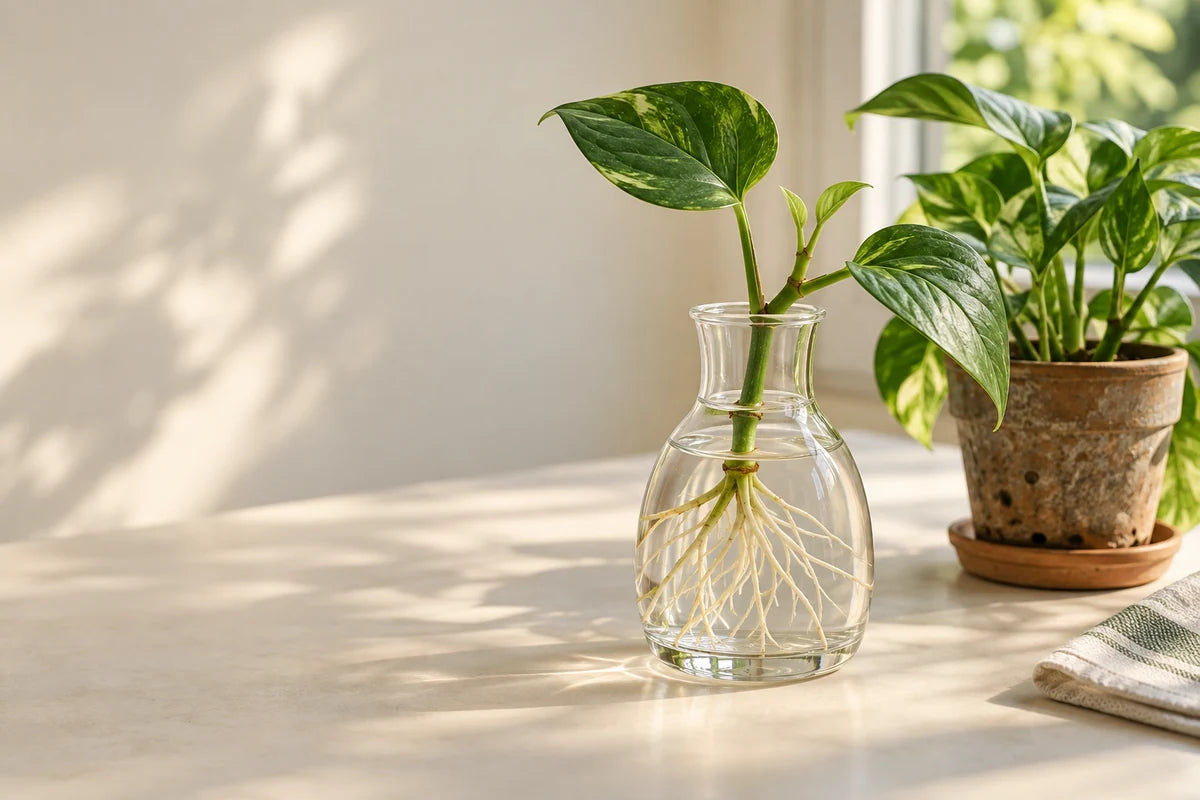
Water roots are encouraging. They can take up water and help a cutting support itself. But a root does not turn into a stem, a new cane, or a fresh plantlet. For most stem-propagated houseplants, that next growth must come from a living node: the small section of stem where leaves, roots, and a dormant bud are organized.
That is why two pieces in the same jar can look equally “alive” at first and go in completely different directions. One may hold a viable node and eventually push new growth. The other may be a leaf or petiole that rooted for a while but has no relevant growing point left to activate.
Healthy roots are evidence of one job being underway. They are not proof that every other job is possible.
Read the cutting, not just the water
Find the five parts that tell the story.
Use this stem-cutting map as a visual check. Plant families differ, and some are deliberately propagated from leaves, but a node-bearing stem cutting needs more than pale roots to move on.
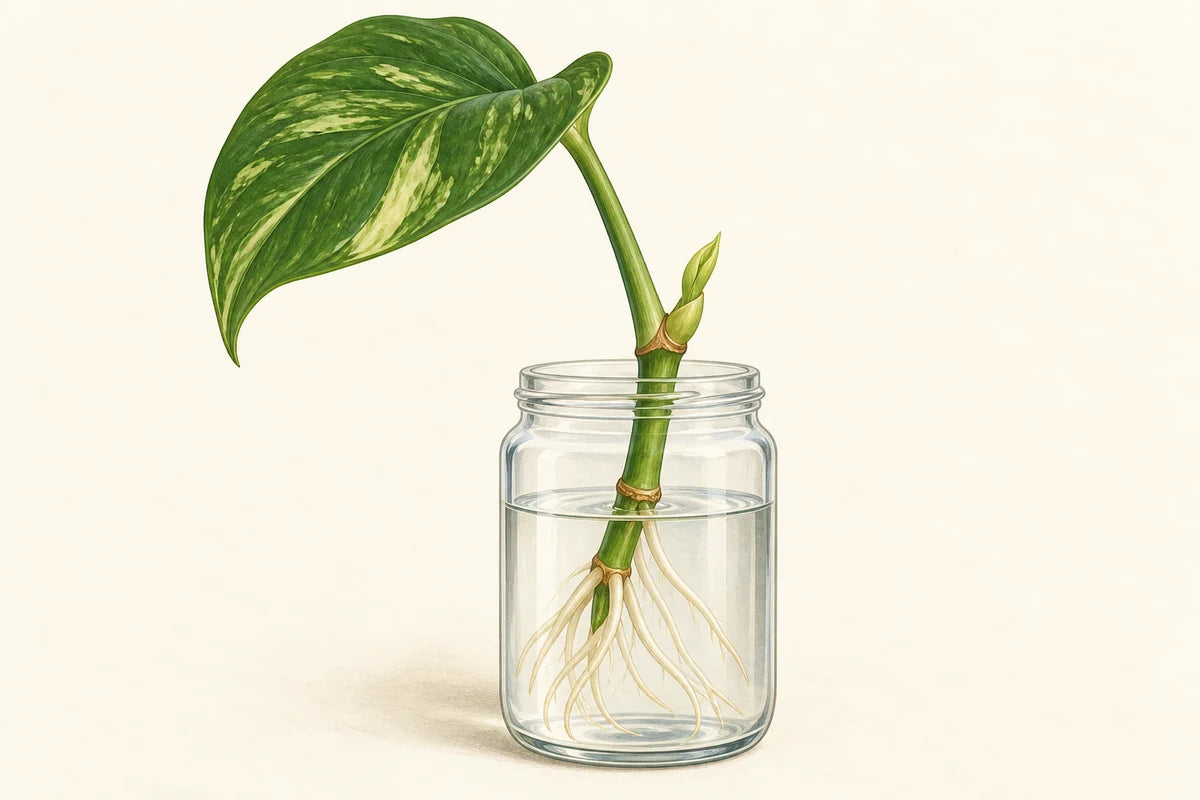 Leaf + petioleNode + sleeping budWater rootsNew shoot
Illustrative anatomy. The exact node shape varies by plant, so inspect the cutting before assuming a leaf base is a node.
Roots
These are the uptake system. Firm, pale to light-colored roots and clean water are encouraging signs—not a final verdict.
Node + bud
This is the growth opportunity. On a stem, look for a leaf attachment, joint, scar, nub, or bud rather than relying on the leaf blade alone.
Shoot response
This is the proof of a continuing plant. A swelling bud or fresh leaf tells you the cutting is starting to build above-ground growth.
Three look-alike outcomes
Choose the next move from what is actually attached.
“Rooted” is a description, not a diagnosis. These three paths keep you from waiting, feeding, or potting by hope alone.
Roots + a clear node
What it means: this is the best candidate for a new plant. Keep the node and its bud above the waterline or medium when the plant’s cutting method calls for it. Give it bright, indirect conditions suitable for the species; do not rush it because the roots look dramatic.
Next check: look for bud swelling, a tiny new leaf, or continued firm tissue before changing everything at once.
Roots, but no relevant node
What it means: roots can appear without a route to a new shoot. Some plants are special cases and can reproduce from leaves; many common stem-cutting plants cannot. Do not treat a rooted leaf as proof of a clone until you know that species’ method.
Next check: trace the piece back to see whether a bit of stem with a bud was included. If not, identify the plant before adding fertilizer or moving it to a large pot.
The cutting is still deciding
What it means: a viable node may need time and stable conditions after roots form. Avoid constant water changes, repeated repotting, or a sudden jump into harsh sun.
Next check: watch the stem and bud—not the root length alone. If tissue turns soft, dark, or collapses, change the failed condition rather than waiting for a shoot to rescue it.
One symptom, several causes
No new shoot can mean the cutting lacks a bud, the bud is damaged, the plant needs a different propagation method, or its conditions are not supporting active growth. A bigger jar, more water, or more fertilizer cannot replace a missing growing point.
Rule out structure first. Then adjust care one variable at a time.
Before you move it to a pot
Look for readiness in three directions.
There is no universal root length that makes every cutting ready. A small cutting should have enough roots to anchor gently, enough healthy tissue to keep its node alive, and a setup that does not stay airless after transplanting.
That last condition is easy to miss. Water culture and pot culture ask roots to work in different environments. Make the handoff calm and proportionate.
- Root check: roots are firm, not slimy or foul-smelling; the water or medium is clean enough to see a change.
- Structure check: you can point to the node/bud that could make a future shoot—or you have confirmed a leaf-propagation exception for that plant.
- Pot check: choose a small container with drainage and a medium you can moisten without packing into a wet, airless mass.
- Aftercare check: protect the transition from temperature swings and harsh sun, then judge progress by tissue and new growth over time.
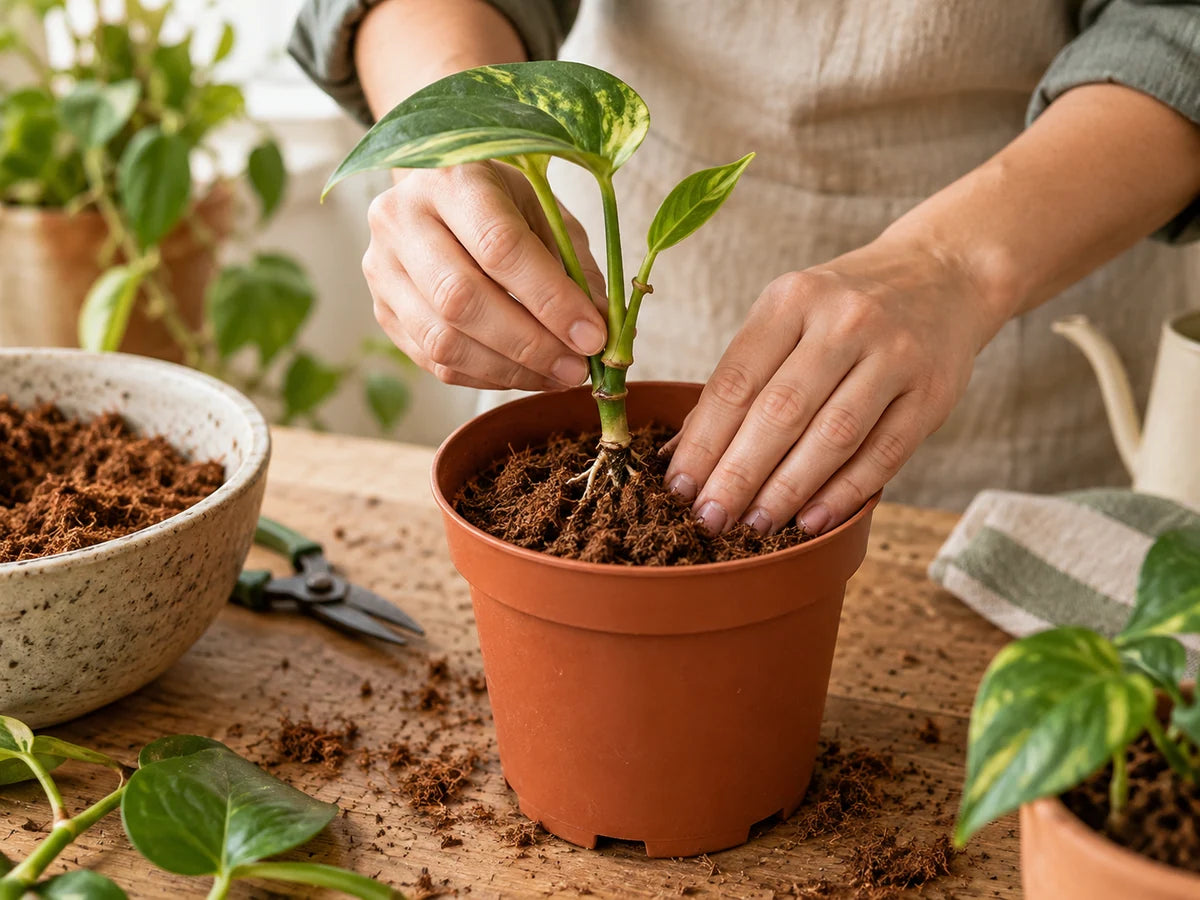
A gentler handoff from water
Pot the roots without burying the future shoot.
When the cutting has a viable stem and the roots are ready to be handled, use a small pot and a lightly settled medium. The goal is contact around the roots, not compression around every air space.
- Hydrate and fluff the coir following its package directions.
- Make a small opening so the roots can spread naturally instead of folding upward.
- Set the node and any developing shoot where you can keep watching them.
- Water in gently; then avoid leaving the pot constantly saturated.
Illustrative potting scene. Medium choice should still suit the species and your watering conditions.
Maya’s propagation bench
Two tools for the stage after the first root.
These are optional supports—not replacements for a viable node, a correct cutting type, or patient observation.

Organic Coconut Coir
If you are moving a rooted, node-bearing cutting into a small pot, this coir can be hydrated and fluffed as a planting medium or part of a mix. It supports the transition; it does not create a node or force a shoot.
See Organic Coconut Coir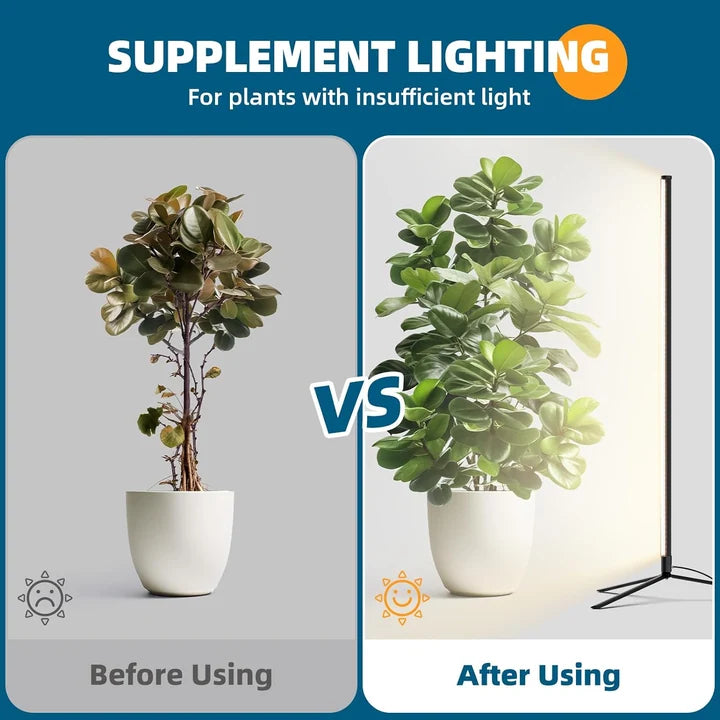
Indoor Plant Growth LED with Stand
Once you have confirmed a viable node, consistent indoor light can be one part of a steadier post-propagation setup. Check the current listing’s specifications and placement guidance before purchasing; light does not replace missing plant structure.
See Indoor Plant Growth LEDMaya recommends these Gardenizi products as optional tools for this care stage. Product availability and specifications can change; review the current product page before purchase.
The next observation is the useful one
Do not ask the roots to promise what only a bud can deliver.
Trace the cutting, find the growth point, then give that living structure a calm chance to respond. That is how “it rooted” becomes a useful beginning instead of a disappointing finish.
Maya Collins · Gardenizi