



 Practical plant notes for home gardeners
Orchid troubleshooting
Why an Orchid Has Roots but Still Does Not Make a New Plant
Healthy roots can keep an orchid alive. They cannot, by themselves, create a new lead. That next step needs a living growth point and conditions that allow it to wake up.
Start with this question: Where, exactly, can this orchid make its next shoot? That answer changes what you do next.
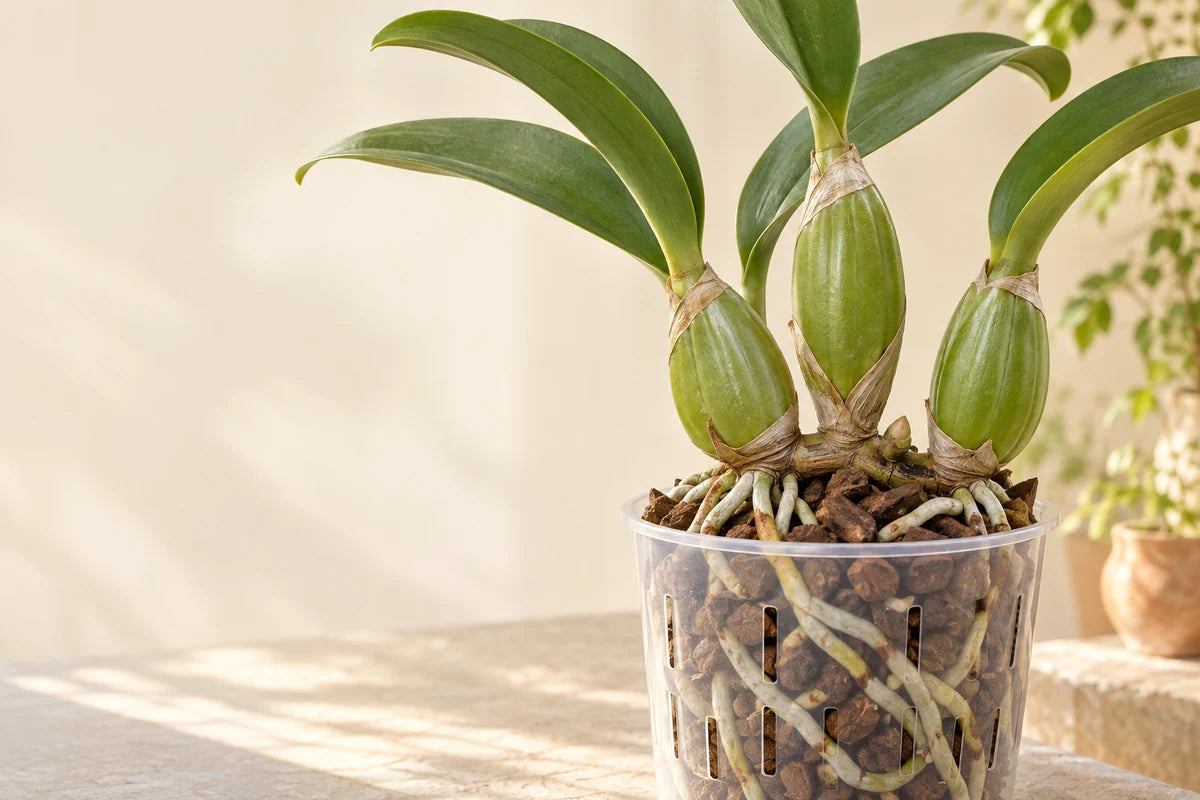
The distinction that matters
Roots supply the plant. A bud supplies the possibility of a new shoot.
What roots can tell you
Firm pale or green roots, a breathable pot and a medium that does not stay sodden are useful signs. They tell you the orchid may be able to take up water and support itself.
What roots cannot tell you
A root does not become a pseudobulb, cane or plantlet. In a sympodial orchid, the next lead comes from a viable eye on the rhizome. In cane-type orchids, a living node may be the relevant structure. If that tissue is gone or exhausted, adding more inputs will not replace it.
Read the structure first
Four parts, four different jobs
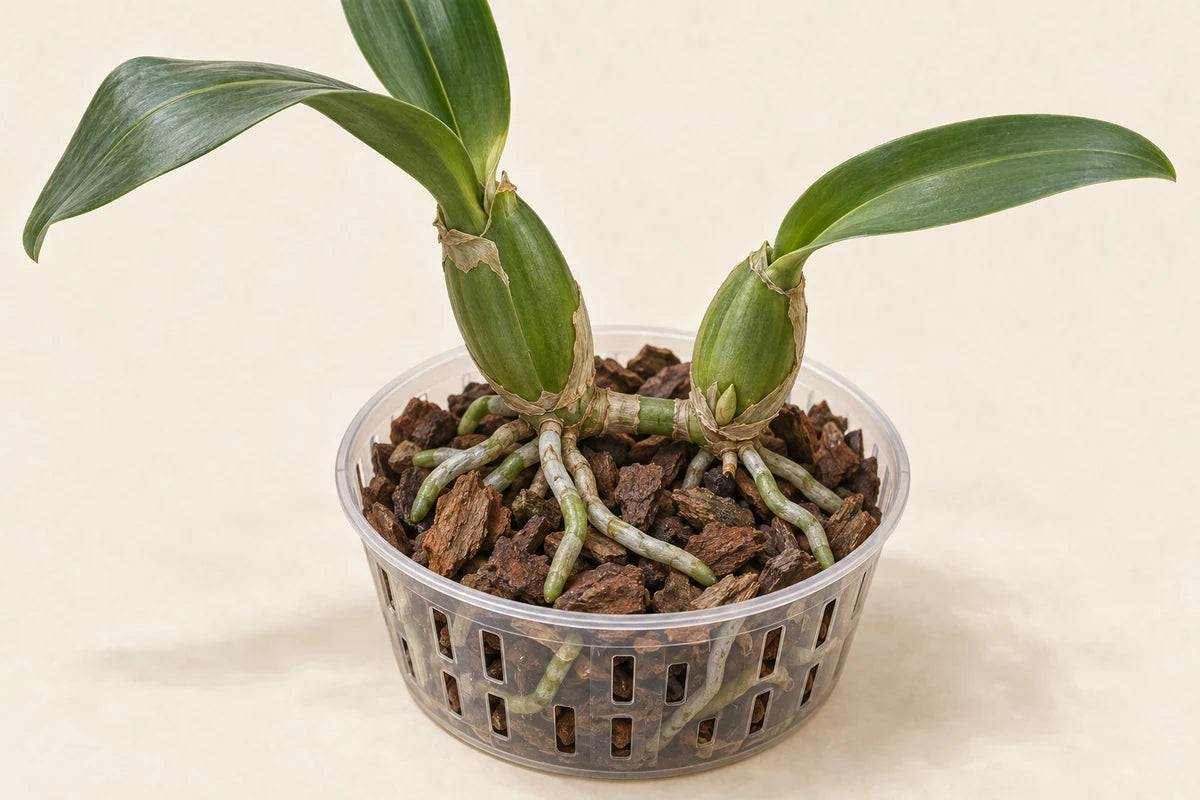 PseudobulbStores water and energy; it does not guarantee a new lead.Dormant eyeThe potential start point. It must be intact and capable of activating.RhizomeThe horizontal stem that connects growths and carries the eyes.Firm rootsSupport uptake—but do not substitute for a growth point.
Illustrative anatomy: a healthy-looking root system and an intact dormant eye are different observations. Watch both.
A patient four-check reset
Before you water, feed or repot, work in this order.
Find the growth point
Look along firm rhizome or cane tissue. A brown, hollow or wholly dried node is not a candidate for a new lead.
Test root quality
Look for roots that are firm rather than soft, dark or trapped in decomposed media with no air space.
Read the growth phase
Fresh root tips, a swelling eye or a developing lead are useful signs of momentum. Some orchids pause naturally between cycles.
Review light and temperature
A plant can maintain roots in low energy conditions without having enough surplus to push new growth. Match care to the orchid type.
Look at the rhizome beside the newest pseudobulb for an intact eye. If a new lead is already swelling there, the “no growth point” diagnosis is wrong—protect the emerging lead and keep conditions stable.
Look for a firm green cane and a viable node. If the cane is shriveled, brown or hollow, do not treat it as propagation-ready; assess the living plant’s next lead instead.
What the stall may mean
Use the symptom to choose the first move.
- Firm cane, visible eyeKeep care steady and watch for swelling. Repeated handling can damage the very point you want to observe.
- Roots look fine; medium stays wetCheck air space, drainage and how long the pot stays wet. A visible root can still be short on oxygen.
- Roots are firm; bulbs or leaves weakenReview light and temperature before treating this as a fertilizer problem. Increase light gradually, not abruptly.
- No viable eye or nodeDo not try to force a new plant from tissue that lacks a growth point. Let the existing plant recover or redirect the propagation plan.
Maya’s carefully chosen support
Use products for the condition they address—not as a shortcut to a new shoot.
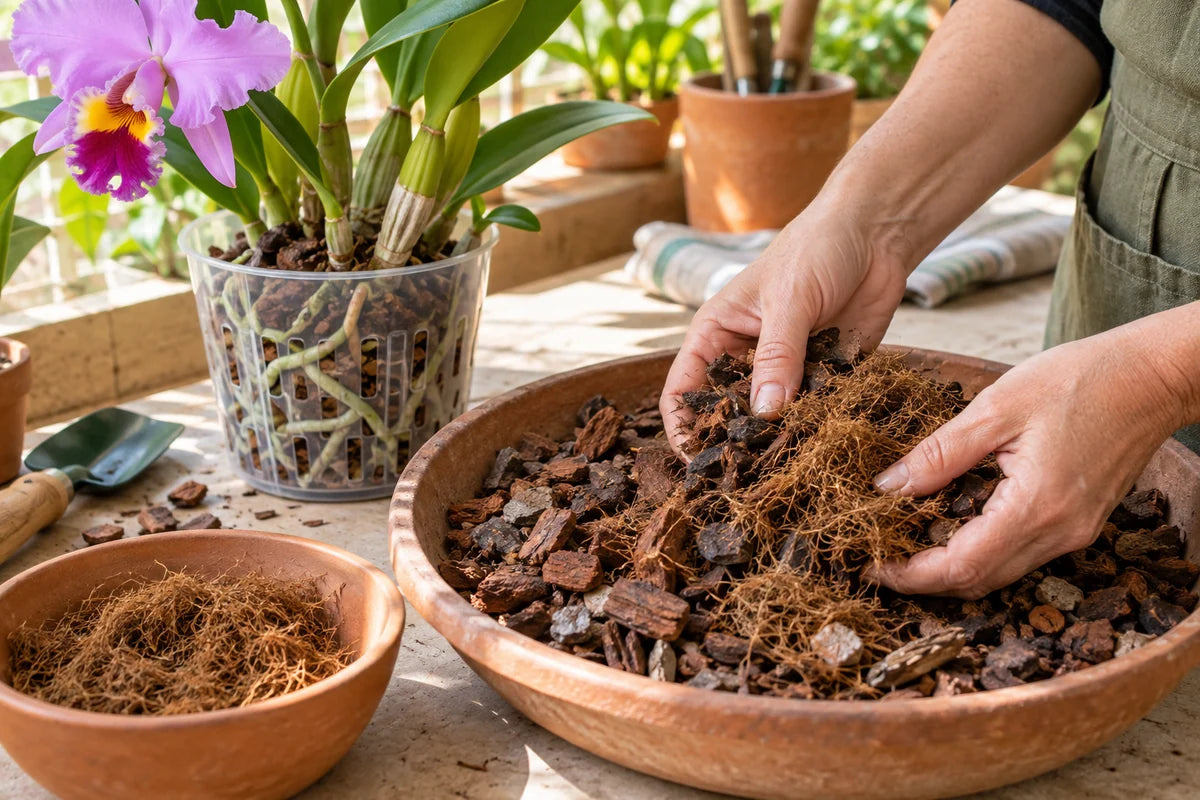

Organic Coconut Coir
Maya recommends coir only as a loose component in a suitable, breathable orchid mix when you need to adjust the medium. It is not a dense universal orchid medium, a rot cure or a way to activate a dormant eye.
Explore Organic Coconut Coir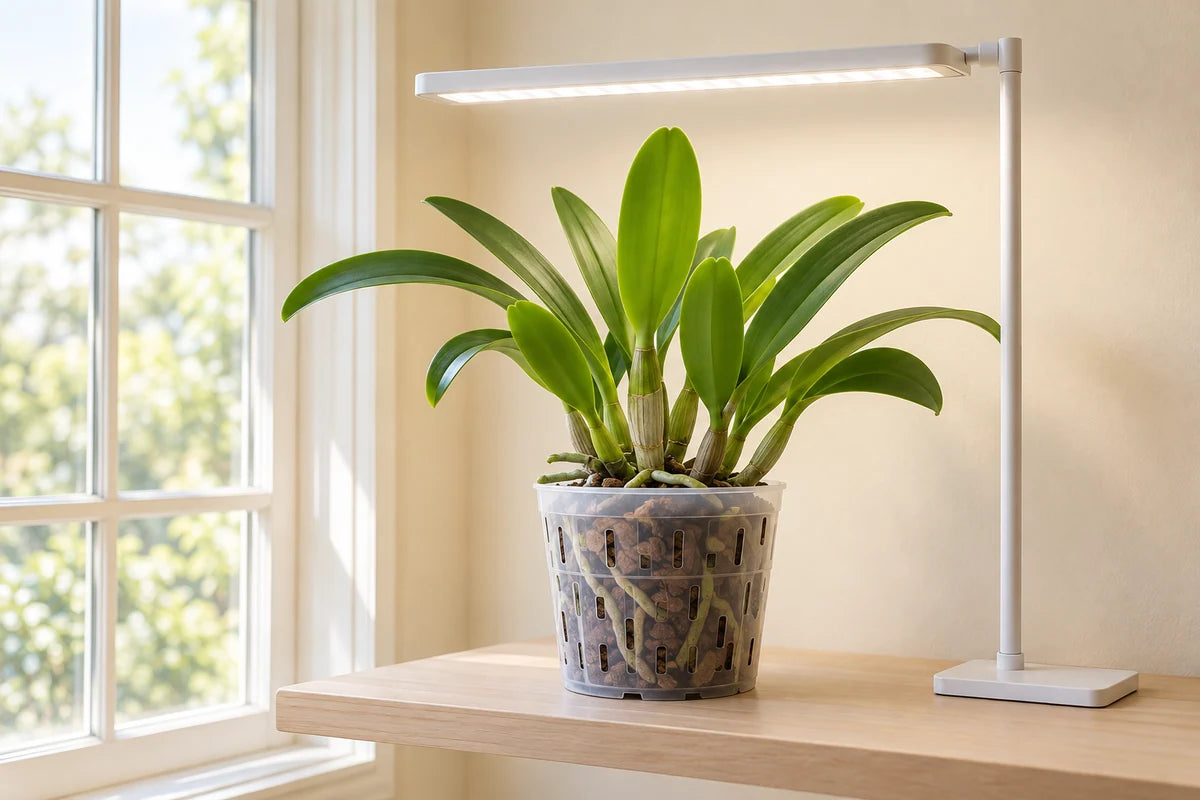
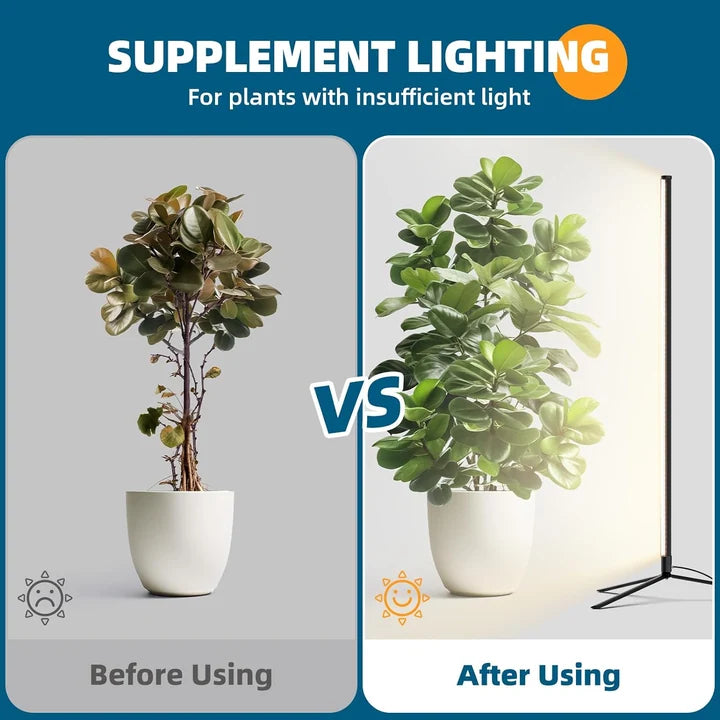
Indoor Plant Growth LED with Stand
For an indoor orchid that is otherwise too dim, Maya recommends a deliberate supplemental-light setup. Introduce it gradually and use the plant’s response—not a promised quick result—to guide adjustments.
Explore the LED with StandOne useful weekly habit
Observe the eye, the roots and the drying pattern before you reach for a remedy.
Some links in this guide are affiliate links. If you buy through them, Gardenizi may earn a commission at no extra cost to you.